
If you read this blog then it is safe to say that you are interested in music, and you will probably have heard of the work The Young Person’s Guide to the Orchestra by composer Benjamin Britten. This is a wonderful piece of music that introduces children and young people to what the different instruments of the orchestra sound like. This book is all about the instruments of the orchestra, what they are, what they sound like, and what sort of music they can play. Before I go on further about this book, if you want to learn more about the composer Benjamin Britten whose fantastic work inspired this book, then I have linked to my Composer Factfile about Britten, and a blog post highlighting some of his music including one familiar piece, below:
Composer of the Month – Benjamin Britten – Factfile
Composer of the Month – What to listen to: Benjamin Britten
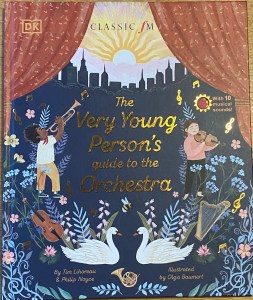
Tune up and take your seat – the orchestra is about to begin!
Join Ava and Jayden as they embark on a musical odyssey, discovering instruments from the trumpet to the timpani, and learning about the composers and their dazzling pieces.
Beautifully illustrated scenes are accompanied by iconic classical pieces, including “The Lark Ascending”, “Flight of the Bumblebee”, “The Carnival of the Animals”, and “Rhapsody in Blue.”
Ideal for young fans of classical music and those beginning to learn an instrument, The Very Young Person’s Guide to the Orchestra will amaze and inspire the maestro-in-making in your life.
Blurb from the back of the book
So what is this book about? To be honest it is one of those “does what it says on the tin” type of books. It aims to introduce very young people to the orchestra, or certainly the musical instruments that make up the orchestra. Ava and Jayden are on an adventure. They are our musical explorers who take us along with them on this journey. They travel to a different location – a concert hall, a clearing in the woods by a lake, a ballet class in Russia, Stonehenge… – for each double page spread. At each location they hear music played by a different musical instrument, an orchestral piece that highlights the particular instrument being discussed perfectly. On each page the authors tell you where Ava and Jayden are and what they are doing, something about the features of the music they are listening to – for example on the page about the flute they tell you “It moved fast and seemed to be fluttering just like a bee’s wings.” – and also gives you a fact about the instrument.
What do I like about this book?
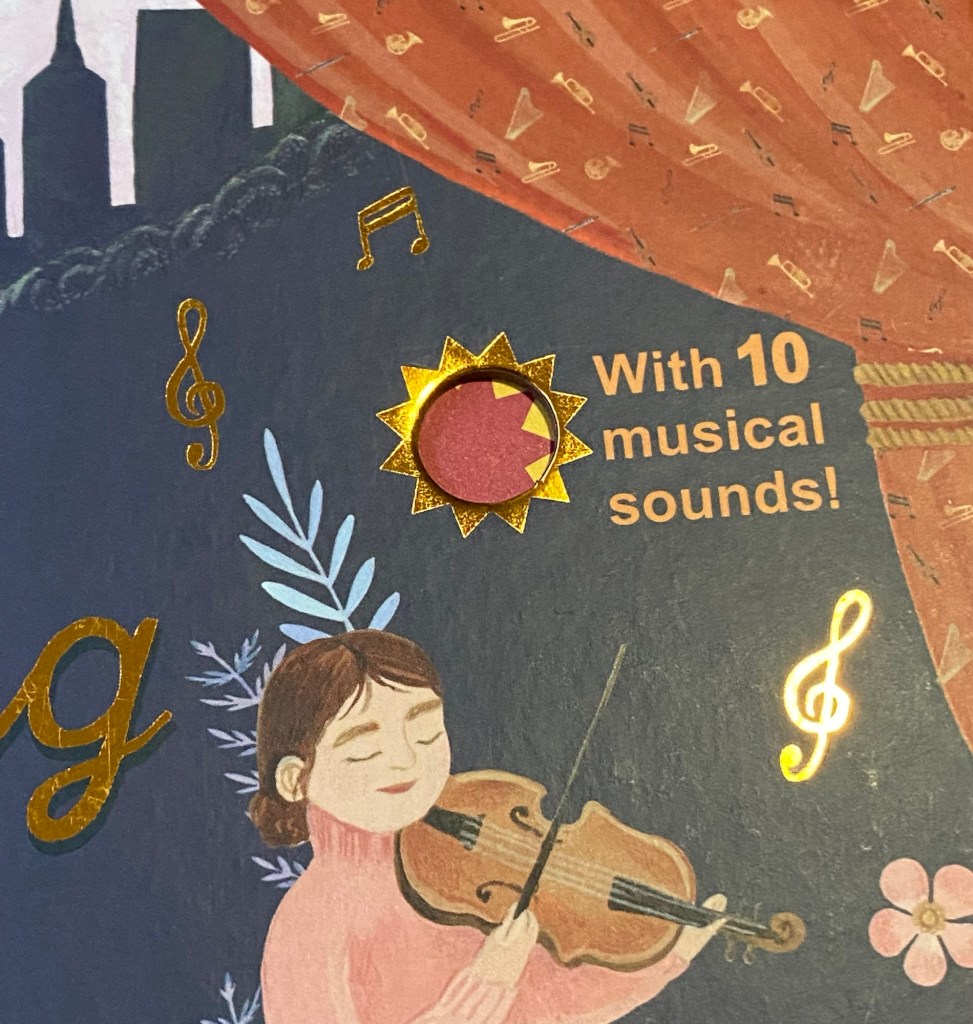
- The best feature for any book for very young children, and especially so one about music, is that on every page there is a bid yellow circle with a red sunburst shape in the middle, and if you press on that circle shape, you will hear a quick burst of the music that Ava and Jayden are listening to. Any sound book with buttons to press is a favourite in our house, and my two definitely enjoyed that aspect of this book. The button to press is a fairly light touch, so it should be easy for most children to press the circle and get the sounds to play.
- This is where the partnership with Classic FM comes in, as the musical excerpts are taken from some of their recordings and are very good quality recordings that will whet yours and your children’s appetite for listening to more of the pieces involved.
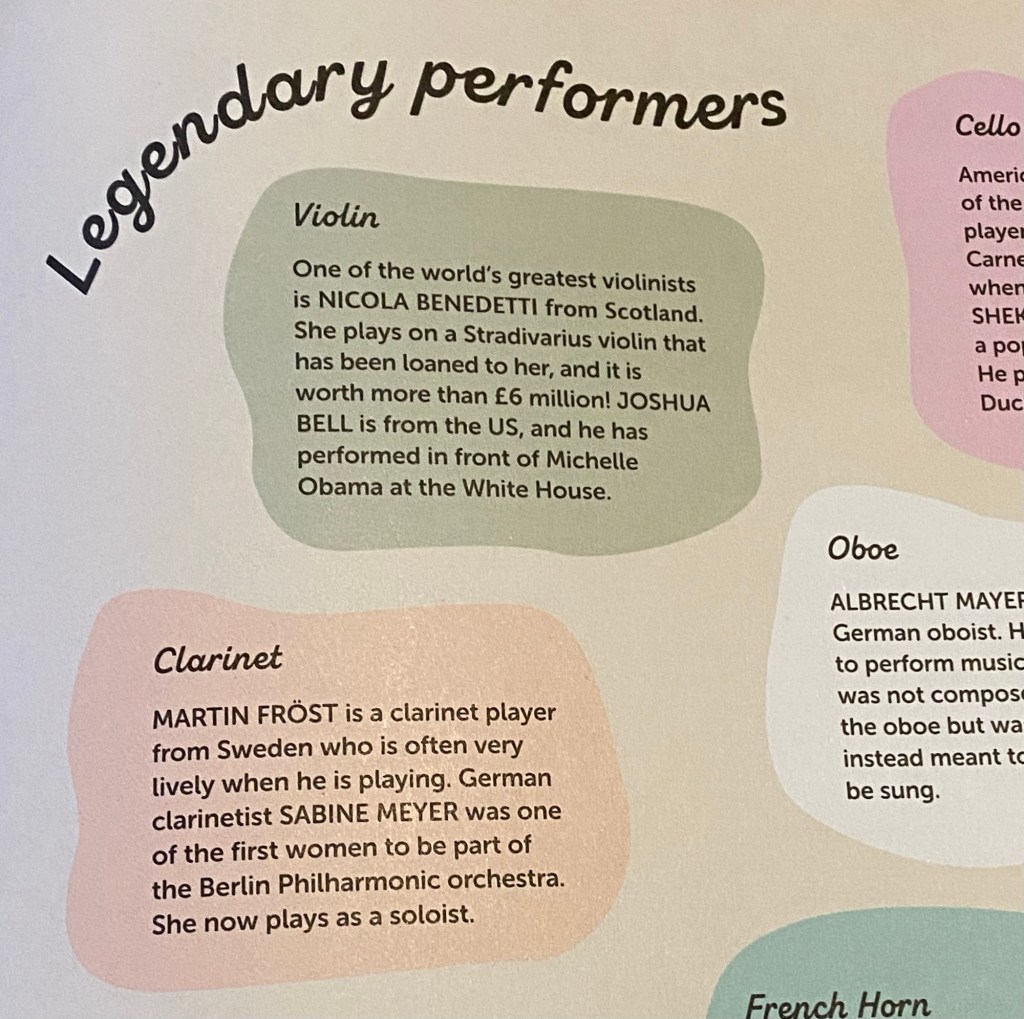
- Helpfully, on the last 6 pages of the book, the authors give you some further information about the pieces of music used to illustrate the musical instruments featured in the book; as well as very potted biographies of the composers of those pieces; a couple of sentences about some legendary performers who play those instruments; and a couple of pages about where the players of those instruments sit within the orchestra, with both an illustration of performers sitting in an orchestra on stage, and a diagram giving you an overview of where each musical instrument is located when they play together in an orchestra. There is also a little bit of information about a visual quiz contained within the book and the answers to that visual quiz.
- The book is aimed at younger readers, so it does not go into a lot of detail about any of the instruments or music involved, which is absolutely right for the intended audience.
- There is an on/off switch on the back of the book so you can turn the book off when you are not using it. This will save the batteries and make the book last longer, and avoid those times when something in a toy drawer presses against one of the yellow circles and sets the music off when you are least expecting it! The batteries used are button batteries, so you must always supervise your children when using this book, and make sure the battery cover is securely on the battery compartment.




What don’t I like about this book?:
For me personally though, and given that they have a high profile sponsor in Classic FM, my expectations of the book are quite high, and there are some things about it that grate on me.
- The text is rather stilted and does not flow, and it feels like the information on the page appears randomly, rather than having any particular structure to help readers orient themselves. There are several music books I have read and reviewed where the idea of characters going on an adventure, or out to see a show, is the excuse (if you like) to tell you more about different musical instruments (Where Are All The Instruments?: West Africa by Nathan Holder); or who go to see a show and this is the pretext to tell you about the story behind the show as well as about that particular style of music (Welcome to the Opera by Carolyn Sloan). These books have more structure to the information they give – for example in Welcome to the Opera, the author and illustrator make use of varying style and colour boxes depending on what they want to convey in those boxes or frames – so information about the plot shows in a blue box, discussion of the things like the different types of voice you can hear in the opera, or different types of song that make up the opera etc appear in a golden frame etc. The structure used makes the book very easy to follow and it helps to bring out the various elements that Sloan wants to bring out. I don’t feel that that has been achieved here. I link to my reviews of these books below, if you want to check them out.
- Now many books for children have their text appear in different places on the page, to keep things interesting, and many books add text over the top of diagrams. While this may be me being rather picky, I think there are some parts of the book where text has been added over darker coloured backgrounds, and I think that would make the book quite hard to read for some people including visually impaired people.
- While it was explained at the end, the diagrams on each page showing where different instruments sat within the orchestra, I felt, could have been explained towards the front of the book rather than the back. The diagrams could be confusing if you don’t already know what they mean, and I feel that confusion could have been avoided.
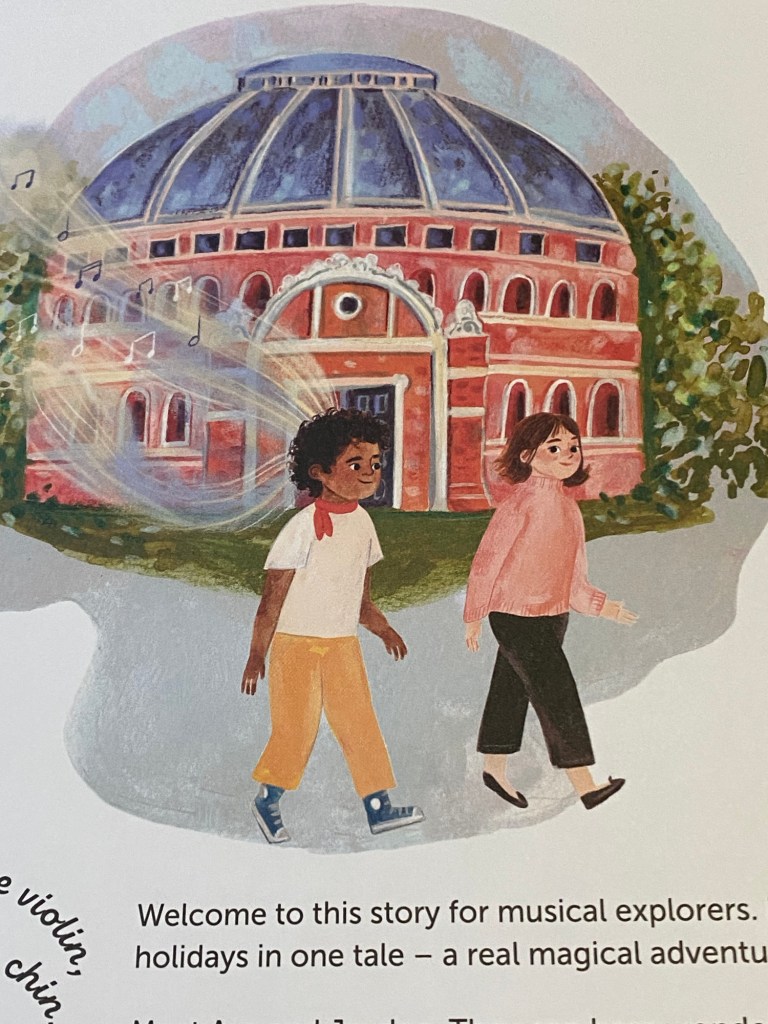
- On the very first double-page spread they go into a “building that looks like a giant birthday cake” and listen to a violinist playing on the stage of that venue. This is paired with an illustration that is unmistakably the venue in question both inside and out. I think they miss a trick by not telling you the name of that venue – it is the iconic Royal Albert Hall, a venue I know very well having worked there for a few years.
Music Book Review: Where Are All The Instruments?: West Africa
Music Book Review: Welcome to the Opera by Carolyn Sloan and illustrated by Kaly Quarles

Who Is the book for?
This is a book where the intended audience is pretty much specified on the front cover. It is squarely aimed at young readers and their carers. I should add here, that the balance of words and illustrations is right here – younger readers gain just as much, if not more, information and understanding of books from the illustrations as they do the words. Pictures are everything to the young reader. And Olga Baumert’s lovely illustrations are a real highlight of the book for me.
Amazon recommends the book for ages 3-6 and I would agree with them. I would probably err more towards the younger age range. My nearly 7 year old liked the book a little, largely because at her school they are going to start taking lessons on an orchestral instrument after Easter and she is getting to try different instruments out this term to see which is a good fit for her. But it didn’t capture her imagination very well – she liked pressing the buttons, listening to the musical excerpts, and looking at the pictures.
Oh, a quick teeny, tiny warning: not all the instruments of the orchestra feature here – one of my children got very upset when reading the book that their particular instrument they are learning to play was not featured. Then again, it was the end of half term, and they were generally very tired and emotional at the time – I promise I was not making them read the book then, they just picked it up by themselves as it was out in the sitting room. But if your child is learning to play a musical instrument and they are particularly territorial about their instrument, bear in mind that they could have something of a reaction to their own instrument being included or missed out. The instruments highlighted in the book are:
- violin
- cello
- clarinet
- flute
- oboe
- French horn
- trumpet
- piano
- timpani (also known as a kettle drum)
- voice
Would I recommend this book?
The book is available to purchase from many book retailers. It is an expensive book though, priced at between £16 and £20 on the day of writing this review depending on where you look for the book. I bought this book a while ago, when it was on offer – I must admit I can’t remember how much it cost, but it was not cheap even then. For me, I am not convinced that the book is worth the high price it commands. And I think that while the book is OK, there are other books that do this much better. If I were asked to rate the book out of 5 stars, I would only give it 2.5 or 3 at the most.
If you have enjoyed reading my blog post, thank you. I am always looking for ideas for the blog, so would love to hear from you with suggestions for topics you would like me to cover in the future. Also, if you would be interested in supporting me to keep this blog running, buying the books to review here, and supplies to make the DIY instruments, for example, I would be absolutely delighted if you would consider buying me a coffee using the following link: Buy Me A Coffee Thank you!!
 getkidsintomusic.com
Excellent review. Very helpful.
LikeLiked by 1 person
Thank you!
LikeLike